
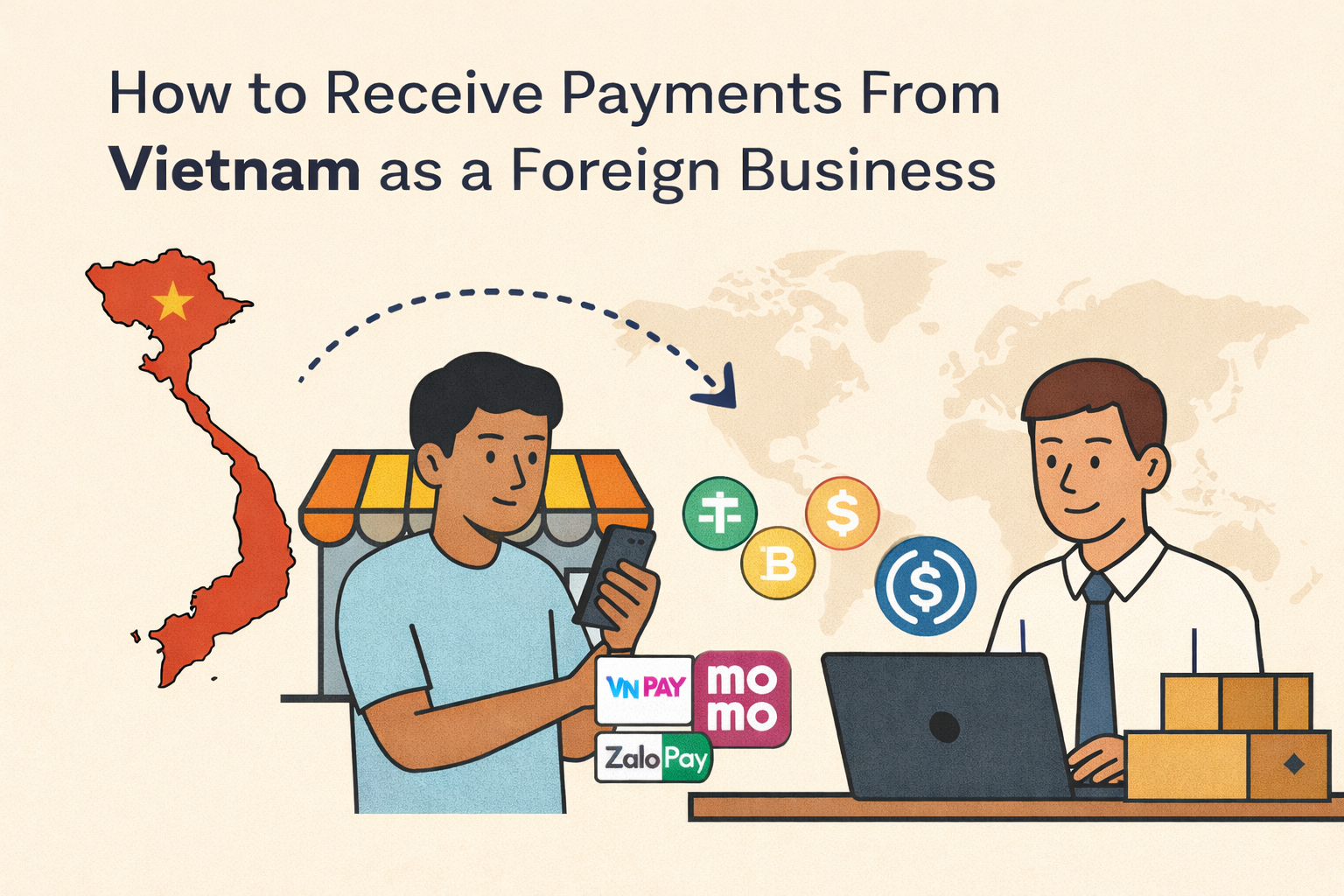
Vietnam has become one of the fastest-growing digital economies in Southeast Asia. With a strong manufacturing base, a booming ecommerce sector, and a rapidly expanding tech ecosystem, more international businesses are working with Vietnamese customers, suppliers, and partners.
However, receiving payments from Vietnam can be complicated for foreign companies. Traditional cross-border bank transfers are slow, expensive, and often require local bank accounts or complex documentation. Businesses frequently face issues with currency conversion, settlement delays, and regulatory restrictions.
In this guide, we explain how foreign businesses can receive payments from Vietnam, the challenges involved, and how platforms like Yativo simplify the process.
Why Receiving Payments From Vietnam Can Be Difficult
Vietnam’s financial system has strict regulations around foreign currency transfers and international payments. For foreign businesses, the most common challenges include:
1. Limited Access to Local Payment Methods
Vietnamese customers and companies often prefer local payment methods and bank transfers in Vietnamese Dong (VND). Foreign businesses typically cannot accept these payments directly without a Vietnamese bank account.
2. Slow International Bank Transfers
Traditional international wires through SWIFT can take several days to settle. Fees are often high and multiple intermediary banks may deduct additional costs.
3. Currency Conversion Challenges
Vietnamese payments are usually made in VND, while foreign businesses typically need to receive USD or stablecoins. Converting VND internationally often requires additional FX providers and adds friction.
4. Compliance and Documentation
Vietnam has strict rules around cross-border transactions. Banks frequently require invoices, contracts, and other documentation before releasing payments abroad.
Because of these challenges, many businesses look for modern infrastructure that can handle local payment collection and international settlement efficiently.
How Foreign Businesses Can Receive Payments From Vietnam
There are several approaches companies use to receive payments from Vietnam.
1. Opening a Local Entity in Vietnam
Some companies establish a Vietnamese subsidiary and open a local bank account. This allows them to receive domestic transfers.
However, this option has significant drawbacks:
- Legal setup costs
- Local tax obligations
- Banking compliance requirements
- Long onboarding processes
For many international businesses, this is unnecessary complexity.
2. Using Traditional Payment Processors
Some global payment processors support Vietnam, but they may have limitations such as:
- Higher transaction fees
- Limited settlement options
- Restricted payment methods
- Slow payouts
This often makes them unsuitable for companies that process high volumes or B2B transactions.
3. Using Cross-Border Payment Infrastructure Like Yativo
Modern payment infrastructure platforms allow foreign businesses to accept local payments from Vietnam without opening a local bank account.
Yativo enables companies to collect payments in VND and receive funds in another currency such as USD or stablecoins, while handling FX conversion and settlement automatically.
This significantly simplifies the process of doing business with Vietnamese customers.
How Yativo Payment Links Work for Vietnam Payments
One of the easiest ways to receive payments from Vietnam is by using Yativo Payment Links.
Payment links allow businesses to send a simple payment request to their customer. The customer pays locally, while the business receives funds in the preferred currency.
Here is how it works.
Step 1: Create a Payment Link in the Dashboard
Log into your Yativo dashboard and go to the Payment Links section.
Click Create Payment Link.
Step 2: Select the Customer
Choose the customer you want to charge from your customer list.
This helps track payments and simplifies reconciliation.
Step 3: Select Vietnam as the Country
Choose Vietnam as the payment country so the system knows which payment rails and currency apply.
Step 4: Choose the Payment Method
Select the local payment method the Vietnamese customer will use.
This may include:
- Local bank transfers
- Local payment gateways
- Regional payment methods supported in Vietnam
Step 5: Choose Your Receiving Currency
Even though the customer pays in Vietnamese Dong (VND), you can choose to receive the funds in another currency such as:
- USD
- EUR
- Stablecoins (USDT or USDC)
This eliminates the need to manage foreign exchange manually.
Step 6: Enter the Payment Amount
Input the amount the customer should pay in VND.
For example, if your invoice is 50,000,000 VND, enter that amount.
Step 7: Review the FX Quote
Yativo automatically generates a quotation showing:
- The exchange rate
- Transaction fees
- The exact amount you will receive in your chosen currency
You can review this quote before accepting the payment.
Step 8: Send the Payment Link to Your Customer
Once the quote is accepted, Yativo generates a payment link.
Simply send this link to your Vietnamese customer via:
- Messaging apps
- Invoices
- Checkout pages
The customer opens the link and completes the payment using their local payment method.
Step 9: Receive Funds and Withdraw
After the payment is completed:
- The funds are collected locally in VND
- Yativo converts them to your selected currency
- The funds appear in your account balance
You can then withdraw the funds as stablecoins, making global treasury management easier.
Receiving Vietnam Payments via API
For companies that want to automate payment flows, Yativo also provides a full API integration.
Using the API, businesses can:
- Create pay-in requests programmatically
- Generate payment links automatically
- Track payment status
- Reconcile transactions
- Integrate payment flows directly into their platforms
Developers can access full API documentation here:
https://yativo.notion.site/Payins-1dcded1deaad812590dcff87d168c2f0
With API integration, businesses can embed Vietnamese payment collection directly into their:
- Ecommerce platforms
- SaaS billing systems
- Marketplaces
- Payment dashboards
- Internal invoicing tools
Benefits of Using Yativo for Vietnam Payments
Access Local Vietnamese Payment Methods
Collect payments from Vietnamese customers without requiring them to send international wires.
Receive Funds in Your Preferred Currency
Customers pay in VND, while you receive USD or stablecoins.
Faster Cross-Border Settlement
Avoid long delays associated with traditional bank transfers.
Transparent FX Pricing
View exchange rates and fees before accepting the transaction.
Global Treasury Flexibility
Withdraw funds as stablecoins for easier international liquidity management.
Use Cases for Receiving Payments From Vietnam
Yativo supports a wide range of cross-border business models.
Common use cases include:
- SaaS companies billing Vietnamese clients
- Exporters receiving payments from Vietnamese buyers
- Marketplaces onboarding Vietnamese sellers
- B2B service providers working with Vietnamese partners
- Freelancers and agencies invoicing Vietnamese customers
Any company working with Vietnamese clients can benefit from simplified payment infrastructure.
Final Thoughts
Vietnam is one of Asia’s fastest-growing digital economies. For international businesses, the opportunity is enormous, but traditional payment infrastructure often creates friction.
Using modern cross-border payment platforms like Yativo, businesses can accept payments from Vietnam without opening a local entity or managing complex banking relationships.
With payment links and API integrations, companies can collect local payments in VND, convert them automatically, and receive funds globally in the currency they prefer.
For businesses expanding into Southeast Asia, having the right payment infrastructure can make the difference between operational friction and seamless global growth.