
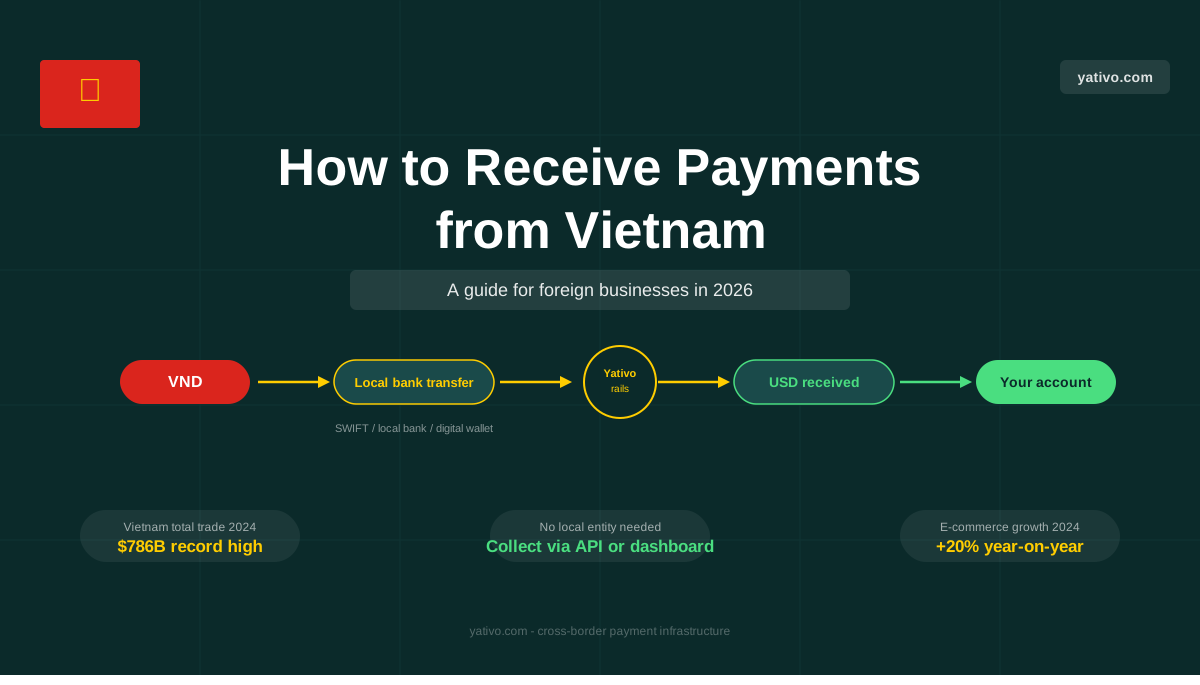
Vietnam is one of the fastest-growing trade economies in Southeast Asia, and foreign businesses are paying attention. Vietnam’s total two-way trade reached a record $786.29 billion in 2024, up 15.4% year-on-year, with exports growing 14.3% to $405.53 billion. The country attracted investments from 114 countries and territories that same year, and its e-commerce market alone was valued at over $25 billion in 2024, a nearly 20% increase from 2023.
Yet for foreign businesses trying to collect payments from Vietnamese clients or partners, the reality is far more complicated than the headline numbers suggest.
Vietnam operates a tightly regulated financial system. The State Bank of Vietnam (SBV) controls cross-border payment flows, foreign currency transactions require specific documentation, and many international payment methods that work seamlessly elsewhere simply do not function the same way in Vietnam. Add to that a preference for local digital wallets, a growing but still fragmented banking infrastructure, and withholding tax obligations for certain payment types, and you have one of the more complex collection environments in Asia.
This guide breaks down exactly how foreign businesses can receive payments from Vietnam in 2026, what rails are available, and how to integrate them via Yativo’s dashboard or API.
Why Collecting Payments from Vietnam Is Harder Than It Should Be
Most foreign businesses assume that receiving a payment from Vietnam works the same as receiving one from any other country. Send an invoice, get a SWIFT wire. That assumption leads to delays, failed transactions, and frustrated clients.
Here is what actually makes Vietnam different:
Currency controls: Vietnam’s dong (VND) is a restricted currency. It cannot be freely converted or transferred internationally without going through licensed channels. This means your Vietnamese client cannot simply wire VND to a foreign bank account and have you convert it on the other end.
Withholding tax: Whenever payments such as service fees, royalties, or interest flow from Vietnam to a foreign entity, the Vietnamese payer is required to withhold a portion and remit it to the tax authorities. For service fees, the withholding tax rate is typically 5% for VAT and 5% for corporate income tax. This means your client may pay you less than invoiced, and it is not an error.
Local payment preferences: Vietnam’s fintech market was anticipated to reach $18 billion by 2024, driven by a strong shift toward digital wallets and mobile payments. Many Vietnamese businesses and individuals prefer paying through local digital wallets and bank transfers rather than international wire transfers.
Correspondent banking complexity: Like most SWIFT-based transactions in emerging markets, payments routed through correspondent banks add time, reduce the final amount, and create uncertainty around delivery.
The good news is that modern payment infrastructure solves most of these problems by giving you access to local collection rails inside Vietnam, so your clients pay in a way that is natural to them, and you receive funds on your end without the friction.
How Yativo Supports Payment Collection from Vietnam
Yativo gives foreign businesses three core rails to collect payments from Vietnamese clients and partners:
Local bank transfer: Your clients pay via domestic Vietnamese bank transfer in VND, using standard local banking infrastructure. This is the most familiar method for Vietnamese businesses and removes the friction of international wires entirely.
SWIFT: For clients or partners who prefer or require international wire transfers, SWIFT remains available as a collection method. Best suited for larger B2B transactions where the payer is a larger institution comfortable with wire transfers.
Local digital wallets: Vietnam has one of the most active digital wallet ecosystems in Southeast Asia. Accepting payments via local wallets removes barriers for clients who default to mobile-first payment methods.
In all cases, Yativo handles the underlying compliance, currency conversion, and settlement, so you receive funds without needing a Vietnamese bank account or a local entity.
How to Start Collecting Payments from Vietnam
Option 1: Dashboard (for manual collection)
If you are collecting occasional payments or want to get started without any technical setup, the Yativo dashboard gives you full control.
- Go to Transfer in your dashboard
- Select the customer or account
- Select source currency: VND or USD
- Choose collection method: local bank transfer, SWIFT, or local digital wallet
- Enter payer details: client name, bank, and account information
- Enter the amount in VND or USD
- Review the quote: see the exact FX rate, fees, estimated delivery time, and the amount you will receive
- Confirm with PIN + 2FA
- Track the payment in real time from your dashboard
- Download the receipt for accounting and compliance
Option 2: API (for platforms automating collections at scale)
If you are building a platform that collects payments from Vietnamese clients programmatically, Yativo’s collections API gives you full control. All endpoints are documented in the Yativo API documentation.
Step 1: Get available collection methods for Vietnam
GET /payment-methods/collection?country=VNM
Authorization: Bearer YOUR_API_KEY
Returns available collection methods, gateway IDs, and supported currencies for Vietnamese payers.
Step 2: Get required payer fields
GET /beneficiary/form/show/{gateway_id}
Forms are dynamic per collection method. This returns the exact fields and validation rules for your chosen rail.
Step 3: Create a payer payment method
POST /beneficiaries/payment-methods/

{
  "gateway_id": 310,
  "nickname": "Vietnam Client",
  "customer_id": "uuid",
  "currency": "VND",
  "payment_data": {
    "payer_name": "Hanoi Tech Co Ltd",
    "payer_account": "0123456789",
    "payer_bank_code": "VCB",
    "payer_email": "ac******@*******ch.vn"
  }
}
Save this once and reuse it for all future collections from the same client.
Step 4: Initiate the collection
Collect in VND:
POST /wallet/collection

{
  "credit_wallet": "VND",
  "amount": 50000000,
  "payment_method_id": 22,
  "customer_id": "uuid"
}
Or request collection in USD:
{
  "credit_wallet": "USD",
  "amount": 2000,
  "payment_method_id": 22,
  "customer_id": "uuid"
}
Step 5: Track and reconcile
Use collection status webhooks to update your internal records, trigger invoicing workflows, or notify your team when funds land.
Dashboard vs API: Which Should You Use?
| Dashboard | API | |
|---|---|---|
| Manual, one-off collections | Yes | No |
| Automated bulk collections | No | Yes |
| Platform or marketplace integration | No | Yes |
| No technical setup required | Yes | No |
| Full programmatic control | No | Yes |
Best Practices for Receiving Payments from Vietnam
Use local bank transfer as your default collection method. Vietnamese businesses are most comfortable paying via domestic bank transfer. Offering this removes friction on the payer’s side and increases the likelihood of on-time payment.
Account for withholding tax in your invoicing. If your Vietnamese client is required to withhold tax on the payment, factor this into your invoice amount upfront. Gross up your invoice so the net amount you receive matches your expected fee.
Request VND collection for local clients, USD for larger institutions. Smaller Vietnamese businesses and individuals typically transact in VND. Larger enterprises and foreign-invested companies are often more comfortable with USD transactions.
Save payer records for recurring clients. Reusable payment methods eliminate re-entry errors and speed up collections for repeat engagements.
Always download receipts. Clean transaction records are essential for cross-border compliance and your own accounting.
For a broader look at payment costs across corridors, see our guide on Hidden Costs of International Payments.
Frequently Asked Questions
Can a foreign business receive payments from Vietnam without a local entity?
Yes. Yativo allows foreign businesses to collect payments from Vietnamese clients using local bank transfer, SWIFT, and digital wallet rails, without requiring a Vietnamese bank account or legal entity.
What currency will I receive?
You can receive funds in USD (or your preferred currency) regardless of whether your Vietnamese client pays in VND. Yativo handles the conversion at a transparent rate shown before you confirm.
What is withholding tax and will it affect my payments?
Vietnam requires payers to withhold a portion of certain cross-border payments, typically 5-10% depending on the payment type, and remit it to the tax authorities. This means you may receive less than your invoiced amount unless you gross up the invoice to account for it. We recommend consulting a Vietnam tax advisor for your specific situation.
What is the fastest way to receive payments from Vietnam?
Local bank transfer and digital wallet collections typically settle faster than SWIFT, as they use domestic rails rather than the international correspondent banking network.
Do I need to be registered with the State Bank of Vietnam?
No. Yativo operates through licensed local partners who handle the regulatory requirements in Vietnam. You access Vietnam’s payment rails through Yativo’s compliant infrastructure.
What payment methods do Vietnamese businesses prefer?
Most Vietnamese businesses and individuals prefer local bank transfers or digital wallets for day-to-day transactions. SWIFT is typically reserved for larger institutional payments.
Start Collecting Payments from Vietnam
Vietnam’s e-commerce market grew 20% in 2024 and the country attracted investment from over 114 countries that year. If you are doing business with Vietnamese clients, having a reliable, compliant way to collect payments is not optional. It is the foundation of a working commercial relationship.
Yativo gives you local collection rails, transparent FX, and full API access, without the complexity of setting up a local entity.
Create a payment link and collect your first Vietnam payment today